Before the Patio Set: How Outdoor Rooms Found Their Furniture
Outdoor room furniture has a varied history, and this account shows how porches, meals, and leisure shaped the forms people use outside today.
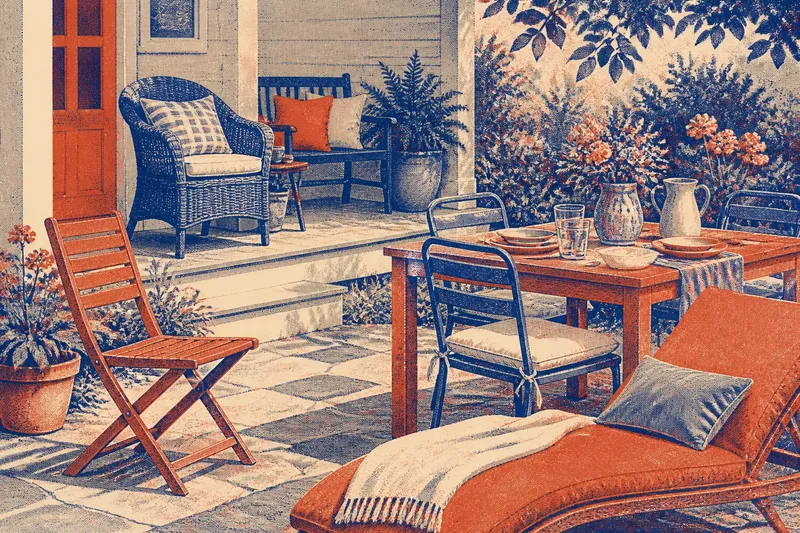
Outdoor room furniture has never belonged to one fixed style or routine. A movable chair, a porch seat, a dining table, and a cushioned lounger each reflect a different way of using space beyond the house. The history is best treated as a set of changing domestic habits, not a universal timeline or a prescription for today’s patio.
Portable chairs made outdoor sitting flexible
A chair that could be carried outside made a garden or yard available for a short rest without requiring a permanent arrangement. It could be placed near a view, under a tree, or beside a doorway, then moved when the weather or the day’s needs changed. That flexibility is a useful contrast with furniture designed as part of a fixed dining or lounge setting.
Historical accounts of outdoor furniture vary by place, period, and household. Rather than claim that one portable chair began a broad tradition, it is safer to see movable seating as one recurring response to outdoor life: people could take a seat where they wanted to spend time.
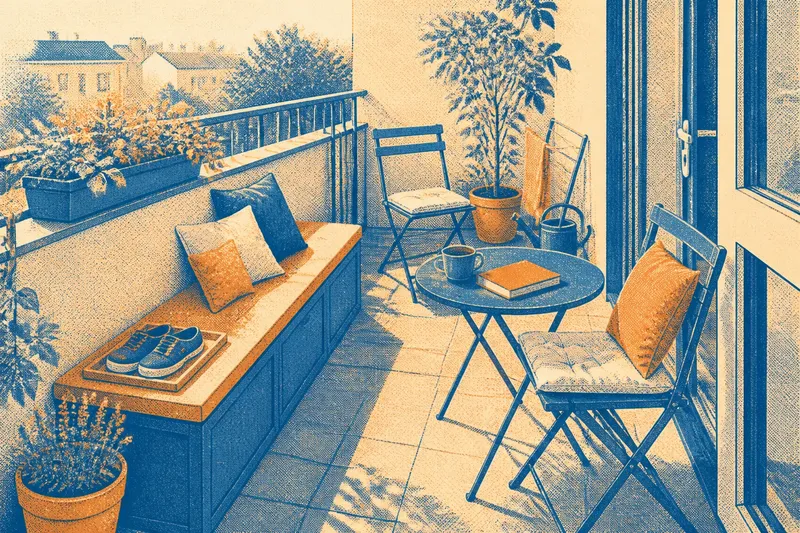
Today, a folding chair or lightweight garden seat can still serve that role. Its value may lie in being easy to reposition, not in matching the rest of the patio. A chair near a plant can make a small corner feel occupied without committing the whole yard to a formal layout.
Porches brought outdoor furniture close to household life
A porch sits between the house and the open air. Its shelter and proximity to interior rooms can make outdoor sitting part of an ordinary routine, though how porches were used has differed across regions, climates, and social customs. Seating near an entrance might support a brief greeting; a chair facing outward might suit watching a street or garden.
The porch also made furniture’s orientation socially legible. Seats turned toward one another encourage conversation, while a chair aimed toward the yard gives its occupant a different focus. Neither arrangement has a fixed meaning, but the direction of a seat can shape how a small space feels.
For example, imagine a homeowner with a covered porch who wants to read while staying near the front door. They begin with one chair facing the street, then turn it toward a side wall to reduce distractions and keep the doorway within view. The observable result is a quieter reading position without moving the chair far from its original place.
Outdoor dining gave tables a distinct role
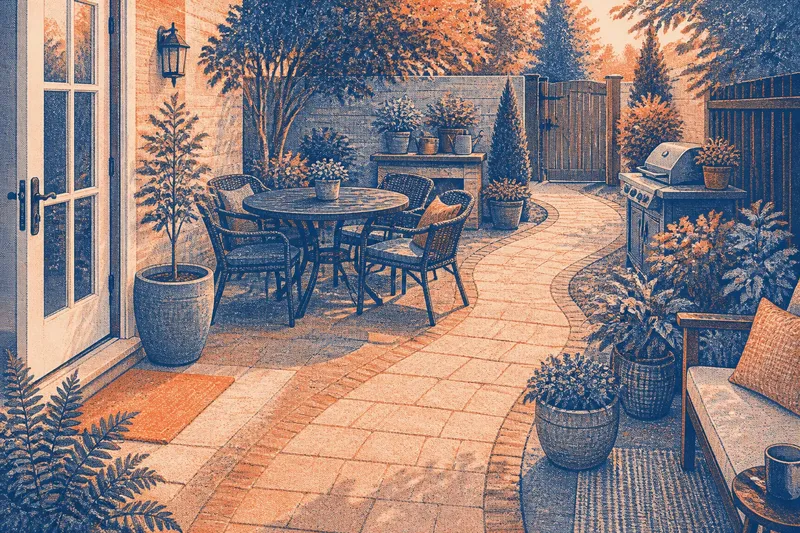
A table changes outdoor seating from a place to pause into a place to gather around food. Chairs must work with the table’s height and allow people to sit and rise comfortably. This is a different purpose from seating arranged chiefly for a view or a relaxed conversation.
Outdoor dining customs have varied, so there is no single historical path from occasional meals to a standard patio set. The more useful point is that dining furniture answers a particular need: a surface for dishes, with seats arranged around it. A café table can keep that function modest, while a larger table makes dining the space’s main use.
These forms need not occupy the same area. A small table near a kitchen door can serve meals or drinks, while separate chairs can face a garden. The distinction is functional rather than stylistic, and it helps explain why one all-purpose arrangement may not suit every outdoor routine.
Materials gave outdoor furnishings different visual character
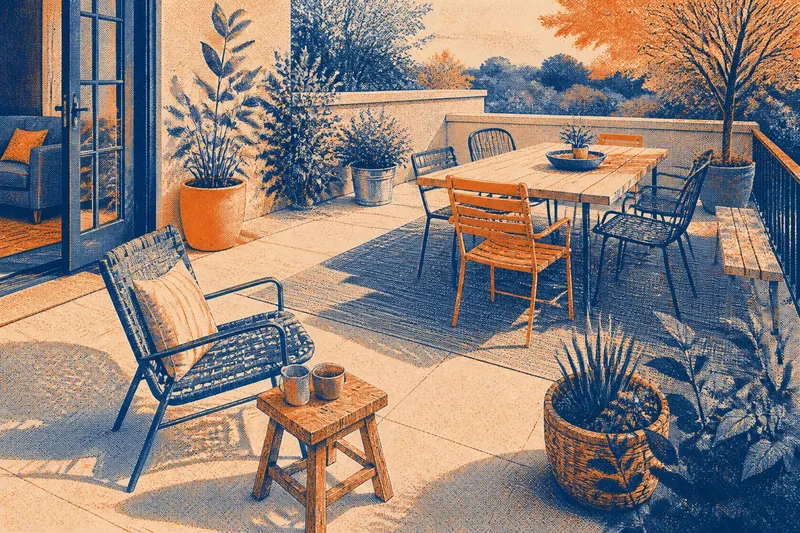
Wood, metal, and woven materials each create a different relationship with a house and garden. Wood may echo timber details or planting; metal can make a chair appear visually light; woven surfaces add texture. These are design tendencies, not guarantees of durability or maintenance needs.
Material choices also depend on exposure. A covered porch and an open terrace face different conditions, while cushions and other soft surfaces may need more attention than bare frames. Check product labels and care instructions for the specific material and location rather than relying on a general impression of what belongs outdoors.
Nearby surfaces can help guide a choice. Against brick or painted siding, a frame can either blend in or stand apart. The decision is about the visual relationship you want, balanced with the care the material requires.
Lounge forms made extended stays more comfortable
Reclining chairs, deeper seats, and cushions support longer periods of sitting than many upright dining chairs. Their presence reflects an emphasis on resting, reading, or lingering with company. That emphasis does not replace earlier uses; it adds another reason to furnish an outdoor space.
A lounge chair and a dining chair can coexist because they serve different tasks. A bench may provide flexible seating for conversation, while a table chair keeps a meal comfortable. These forms make more sense as responses to use than as pieces in a required matching collection.
Soft furnishings also bring practical questions. Consider where cushions will go when not in use and whether moving them is part of the household’s routine. Manufacturer care instructions can clarify what a particular fabric or filling requires, especially in exposed locations.
How does outdoor furniture history inform a space today?
Did outdoor furniture develop in the same way everywhere?
No. Climate, architecture, available materials, and local customs shaped outdoor furnishings differently. A porch, courtyard, balcony, or open garden offers distinct conditions, so broad claims about one shared history should be treated cautiously.
Why were portable outdoor chairs useful?
Movable seating lets someone choose a spot without making a permanent furniture arrangement. It can be carried toward shade, a view, or a doorway as circumstances change.
What distinguishes outdoor dining furniture from lounge furniture?
Dining chairs are arranged to work with a table and a meal, while lounge forms favor a more relaxed seated position. The distinction is about intended use, not a strict rule about appearance.
How should historical styles influence a modern patio?
Use them as context rather than a template. A period reference may suggest a material or silhouette, but the final choice can reflect the home’s architecture and the way its occupants use the space.
Outdoor room furniture reflects changing habits, not one ideal
The history of outdoor room furniture is less a straight progression than a collection of responses to different settings: a movable seat for a pause, porch furnishings for time near the house, tables for meals, and lounge forms for longer stays. The record is varied, and any account that treats these habits as universal risks flattening those differences.
That variety leaves room for contemporary choices without requiring a period look. A folding chair, café table, or cushioned lounger can each carry a recognizable purpose while fitting a different home and climate. Outdoor room furniture is most revealing when considered as part of domestic history—and most useful when its form suits the setting it occupies.