How to Make Mixed Outdoor Furniture Feel at Home
Make mixed outdoor furniture feel at home by choosing a connection that suits your patio, then check scale, upkeep, and placement before adding anything.
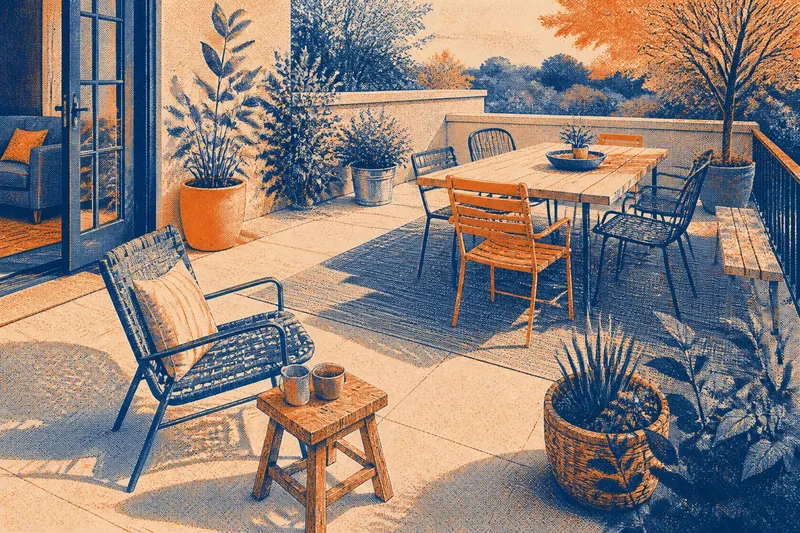
Mixed outdoor furniture feels more at home when the pieces suit the patio’s layout, not just one another. Before adding a cushion or accessory, look at how each piece occupies the space and how you move around it. That can reveal whether the real mismatch is visual or simply practical.
A mixed collection can include different materials, shapes, and finishes without needing a repeated detail to tie everything together. Give each piece a clear role: dining, lounging, setting down a drink, or keeping a path open. Then decide whether any item needs to change position or leave the grouping.
Start with the patio’s layout and use
Place furniture according to what you do there. A dining table belongs where chairs can be pulled out without blocking a doorway; a lounge chair may work better where it faces the garden or catches a view. Keep the route between the door and the seating area clear.
Look at the arrangement from the doorway and from the place you sit most often. A tall chair back or bulky table can interrupt a view even when the pieces look attractive up close. If one item dominates, try shifting it to the edge of the group before introducing another object to balance it.
Use proportion to give each piece room
Furniture can feel disconnected because its scale differs, not because its finish does. A broad table may overwhelm narrow chairs, while a low side table can disappear beside a high-backed seat. Consider the height, width, and visual weight of each object in relation to its neighbors.
Leave enough room to sit down, pull out a chair, and pass through the patio. If the arrangement feels crowded, remove or relocate a piece rather than filling another corner with a matching accessory. The result should be a usable grouping, not a display that works only from one angle.
Choose a layout before adding coordinating details
Not every difference needs a visual link. When the arrangement already works, a distinctive chair or table can remain the point of interest. Add a connecting detail only if it solves a specific problem, such as a grouping that feels scattered from the main view.
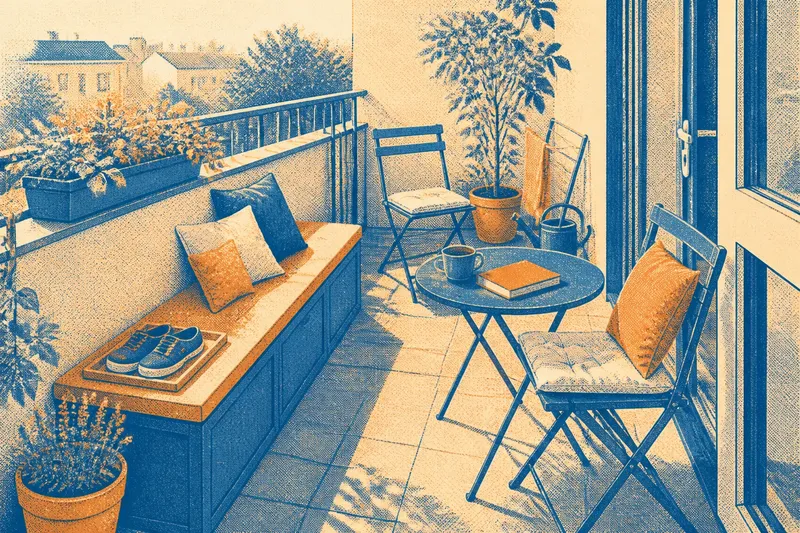
Say you have a narrow balcony with a folding metal chair, a low wooden stool, and a planter beside the door. First, place the stool near the chair as a surface for a cup, then move the planter to the far corner so the doorway stays clear. From the door, the seating now reads as one useful spot, and the planter marks the edge without asking for another matching item. If the chair still feels crowded, fold it away when it is not in use rather than buying additional furniture.
Check these details before changing the arrangement
- Observe the route from the door. If a chair or table blocks the path, move it to the side; if the route remains clear, keep the layout and check another detail.
- Observe whether chairs can be used comfortably. If a chair cannot be pulled out or approached easily, shift the table or remove a seat; if it can, leave that spacing alone.
- Observe which piece dominates the view. If a tall or bulky object blocks the garden or doorway, reposition it; if no item interrupts the view, avoid adding a balancing object.
- Observe whether each item has a purpose. If a piece has no clear use, move it elsewhere or remove it; if it supports an activity, keep it in the grouping.
- Observe whether the arrangement works from the main seat. If an object feels out of place from there, try a different position; if the grouping looks settled, stop adjusting it.
- Observe how the furniture is cared for. If a piece needs protection or cleaning you cannot provide, relocate it under cover or choose a more manageable replacement; if its care suits your routine, keep it outdoors as planned.
Consider care before keeping furniture outdoors
Wood, metal, and woven furniture can call for different cleaning and storage routines. Check the product label or manufacturer instructions before deciding where a piece will stay. If it needs protection that is difficult to provide, place it under cover or choose an alternative suited to your routine.
Think about cushions and small accessories, too. Items that need to be brought indoors may be inconvenient if there is nowhere to store them. A simple arrangement that you can maintain often works better than one that depends on frequent rearranging or special care.
Questions to settle before adding another piece?
How can I tell if my patio furniture is too crowded?
Notice whether you can reach each seat, pull out chairs, and pass through without moving other objects. If those actions feel awkward, remove or reposition a piece before adding anything.
Does mixed outdoor furniture need a shared color?
No. A clear layout and useful roles can make different pieces feel considered without a repeated color. Add a color link only if the grouping still looks scattered from the main view.
Where should I place a small patio table?
Put it within easy reach of the seat that will use it, while keeping the route through the patio clear. If it obstructs movement, move it to the edge or try a different surface.
Should I replace a piece that looks different?
Not if it fits the space and serves a purpose. Try changing its position first; replace it only if its size, use, or care needs remain a problem.
Mixed outdoor furniture can work without a matching detail if every piece has room and a reason to be there. For a patio that feels unsettled, check the path, seating, and view before shopping; the most useful change may be moving something you already own.