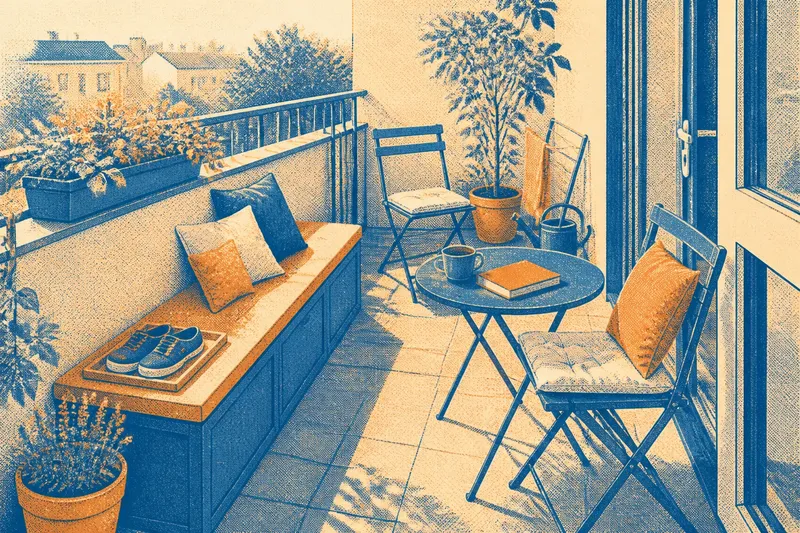
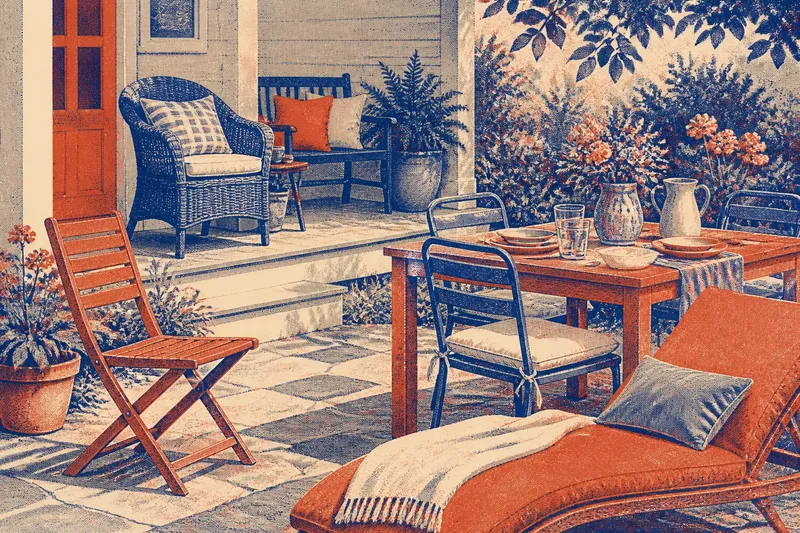
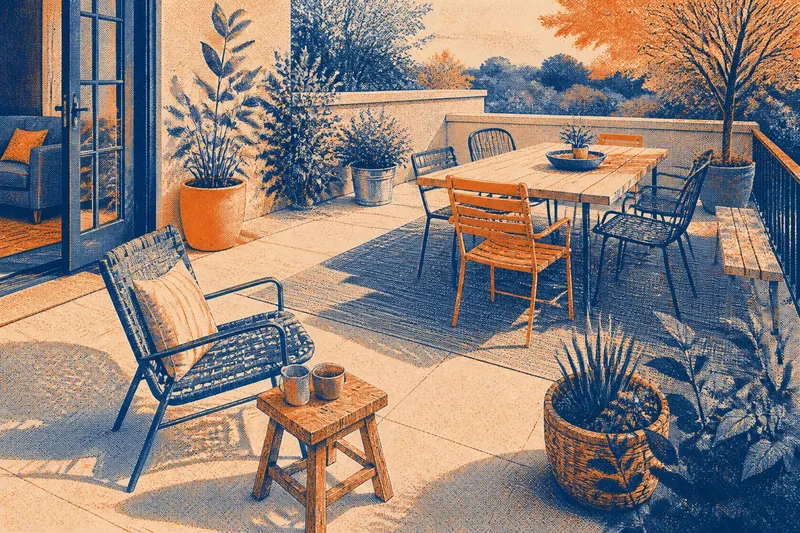
The Clear Route Through a Small Patio
A clear route through a small patio makes arrivals and everyday trips feel natural. Map the main entry, protect turning space, and place furniture with purpose.
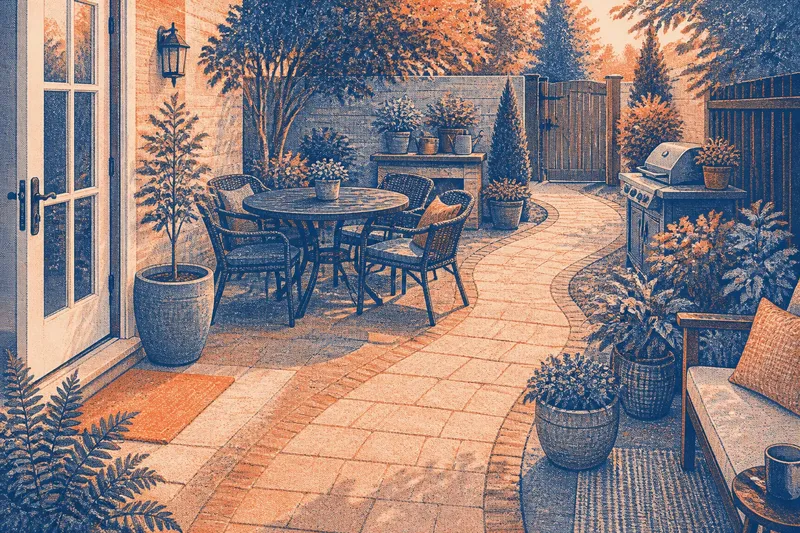
A clear route through a small patio makes the space easier to use before you move a single chair. Start by noticing where people enter and where they naturally head next: the back door, a gate, a planter, or a place to sit. That everyday path should shape the layout, not be squeezed in after the furniture is arranged.
On a compact patio, a route does not need to look like a hallway. It needs to remain legible and free of obstacles during ordinary use. A gentle curve around a table can feel more natural than a straight line, provided people can pass without stepping around chair legs or brushing against pots.
Observe the route before changing the layout
Spend a few days watching how the patio is actually used. Notice which door opens outward, where someone pauses to set down a bag, and whether a trip to the grill or hose crosses the path to the seating area. Look at the patio at different times, since an open route in daylight may be crowded by a chair pulled out for dinner.
Sketch the outline on paper or use painter’s tape to mark the current furniture positions. Draw arrows from each entry point to the places people visit most. Include routes used while carrying something, such as a watering can or serving tray. This makes occasional but awkward crossings visible before they become part of the finished arrangement.
Pay attention to the ground as well as the objects. A raised threshold, uneven paver, or door swing can influence where the route should bend. Avoid treating a narrow gap as usable simply because one person can squeeze through it sideways; a route should allow a relaxed passage in the way the patio is normally occupied.
Give the main entrance a clear landing
The space just beyond a door or gate often determines whether the whole patio feels welcoming. Leave room to step outside, turn, and close the door without immediately meeting a chair back or planter. If the entrance opens onto a corner, keep the first part of the route open and let the path widen farther into the patio.
When there are two entry points, identify the one used most often and protect that approach first. The less-used entrance still needs a workable connection, but it may be served by a narrower secondary route that does not cut through the main seating area. Keep gates easy to reach and avoid placing loose decor where it can drift into their swing.
Imagine a small patio with a back door on one side and a garden gate at the far corner. If a round table sits between them, shift it toward the quieter wall and turn the chairs so the door-to-gate line passes behind the seating rather than between it. The expected result is a more direct walk, with people able to join the table without making the entrance feel blocked.
Arrange furniture around the path, not across it
Choose the route first, then position the largest items around its edges. A dining table may sit beside the path if chairs can be drawn out without closing it. A bench can define one side of the route, while a movable side table can be kept outside the turning area and brought closer when needed.
Test furniture in use before settling on its final place. Pull out each chair as someone would during a meal, open the door fully, and walk the route carrying an everyday object. If a chair blocks the passage whenever it is occupied, rotate the table, reduce the number of chairs in that spot, or move the seating group away from the entry.
Plant containers can guide movement without creating a hard barrier. A single substantial pot may mark the edge of a seating zone, while a cluster of smaller pots can make the route feel pinched and visually busy. Keep foliage from leaning into the walking line, and place watering tools where they do not become permanent obstacles.
Let the clear route support the patio’s rhythm
A route feels natural when it connects useful places in a sequence. The path from the door might pass a small landing area, continue beside seating, and end at a grill or planted corner. It should not force visitors to cross the center of a conversation or weave between unrelated objects to reach the next destination.
Use visual cues to make the line easy to read. A change in paving direction, a narrow strip of outdoor rug, or a row of containers set to one side can suggest where to walk. Keep these cues subtle; a route that is overmarked can divide a tiny patio into rigid zones and leave less room for flexible use.
Consider the view from inside, too. If the route appears as a clear opening from the back door, the patio can feel more connected to the room beyond it. That does not require an empty center. It means arranging objects so the eye can follow a plausible way through rather than stopping at a crowded cluster.
Check the route as routines change
Once the arrangement is in place, revisit it after a normal day of use. Notice whether shoes, cushions, a watering can, or a serving tray tend to land in the same spot. If an item repeatedly occupies the walking line, give it a nearby home rather than relying on everyone to move it each time.
Make a brief check when the patio changes function. Before guests arrive, see whether added chairs leave the entrance and main route open. When plants fill out or outdoor cushions come out for the season, check that the usable path has not narrowed. For furniture, plant care, and local access requirements, follow product labels, manufacturer instructions, or applicable local rules where relevant.
A small patio does not need one fixed arrangement for every occasion. Keep lightweight pieces easy to shift, but decide in advance where they belong when the patio returns to its everyday setup. The clear route through a small patio remains useful when it is treated as part of the routine: observe it, protect the busiest line, and adjust the surrounding objects when real use changes.
What people ask about patio routes?
How wide should a patio walking route be?
Allow enough room for the people who use the patio to pass comfortably, including when a door is open or a chair is occupied. The right clearance depends on the layout and mobility needs, so judge it in ordinary use rather than by an empty-floor view.
Should the route run through the middle of the patio?
Not necessarily. A route along the edge of a seating group often preserves conversation and gives people a direct way through, while a central line can work when it connects the main entrances without splitting the useful area.
How can plants define a path without blocking it?
Place containers along one side of the route and leave the walking line visually open. Choose positions that remain clear as foliage grows, and move small pots that begin to collect near the entrance.
What if the main route crosses the seating area?
First try shifting the seating group or turning the table so the route passes behind it. If the crossing cannot be avoided, keep the crossing point obvious and clear, rather than making people thread between chair legs or decor.